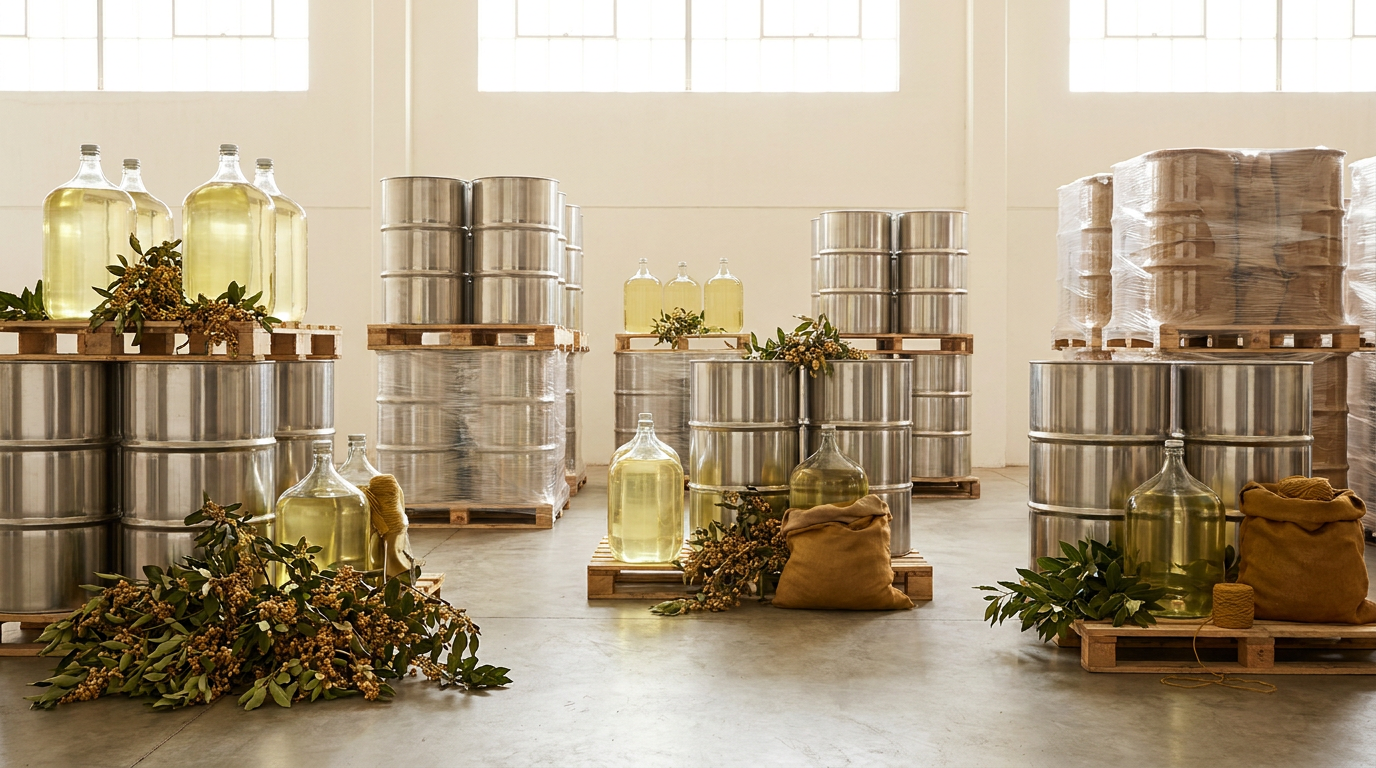
Litsea cubeba, sold in the trade as may chang, is the workhorse citrus note behind countless candle, soap, and home fragrance lines. Buying it by the pound instead of the bottle means understanding grade, documentation, and the substitutions that show up when citral prices swing.
See current per-pound pricing on the wholesale page before you place a sample order.
Litsea cubeba is steam-distilled from the small, pepper-like fruit of a laurel-family tree grown across southern China, Taiwan, and parts of Southeast Asia, not from a peel or a leaf. That distinction matters to a buyer because it explains why the oil's lemon character is bolder and slower to fade than expressed citrus, a quality covered in the full profile of the oil.
The trait every wholesale buyer is really purchasing is natural citral content: the aromatic compound responsible for the oil's vivid, long-lasting lemon top note. A closer look at that molecule explains why citral level, not just aroma on first sniff, is what should anchor a purchasing decision, and why how the fruit is harvested and distilled affects that level batch to batch.
| Sold as | What it actually is | How to recognize it |
|---|---|---|
| Litsea cubeba oil / may chang oil | Steam-distilled from the ripe fruit of the tree, sold under either name interchangeably | Label lists Litsea cubeba as the sole botanical source, with a batch-specific test report available |
| Litsea cubeba blended with lemongrass | Cut with a cheaper citral-bearing grass oil to stretch volume while keeping a similar lemon smell | Label lists more than one botanical species, or the price sits far below the going rate for the stated volume |
| Litsea cubeba blended with citronella | Cut with a lower-cost citronella oil that shares some aromatic overlap but a coarser scent | A harsher, less rounded lemon smell than a single-species sample, often paired with vague labeling |
| Synthetic citral sold as natural may chang | Isolated or lab-synthesized citral with no actual fruit distillation behind it | No botanical name on the label, no Certificate of Analysis offered, and marketing language that avoids the word natural |
For a walkthrough of what a compliant label and test report should actually contain, see how to read a label and test report before ordering.
The sourcing trap with this oil is not counterfeit branding, it is dilution with cheaper citral-bearing relatives. A drum labeled simply 'citrus blend' or listing more than one botanical species alongside Litsea cubeba is very often cut with lemongrass or citronella to stretch yield. Ask for the botanical name on its own line and a batch-specific test report before wiring payment on a large order.
The buyers who actually order this oil by the pound are candle and soap manufacturers chasing a citrus top note that survives the pour or the cure, home fragrance and cleaning brands formulating sprays and diffuser blends, and independent perfumers using it as an affordable, long-lasting substitute for pricier citrus absolutes. A look at bulk buying patterns for soap and candle makers lines up with what we see in our own order volumes.
What separates a serious wholesale buyer from a hobbyist restocking a home diffuser is documentation discipline. Before committing to a drum-sized order, most professional buyers want a supplier who can answer a specific set of questions without hesitation, the kind laid out in a buyer's guide to supplier questions for craft makers.
Before placing a bulk order, confirm the following with any supplier, ours included.
Our own batch documentation is published rather than sent on request: the current Certificate of Analysis covers every size we sell, from a 0.5 oz sample up to a 400 lbs drum, and it is worth comparing against whatever a new supplier hands you.
Real wholesale buying rarely starts at the top of the size ladder. Most professional formulators sample small, confirm the oil performs in an actual candle pour or soap batch, and then scale.
For buyers moving straight to production volume, the wholesale pricing page breaks out per-pound cost at each pound-tier size, and reaching out directly is the fastest way to confirm lead time on a drum-sized order.
Start with a 1 oz or 2 oz bottle and run it through your own process, whether that is a candle pour, a cold process soap batch, or a diffuser blend, before committing to volume.
Compare the batch's documentation against the published Certificate of Analysis and confirm the aroma matches what you tested at sample size.
Move to a 5 lbs or 25 lbs pail for a first production run, or straight to 100 lbs or 400 lbs once your formulation is locked.
Request the current batch documentation with every reorder rather than assuming it matches the last shipment; natural citral level can shift slightly between harvests.
The sections below break out the specific wholesale buyer categories this oil actually serves, with the sourcing and sizing questions that matter to each.
May chang's citral-heavy lemon note is one of the few citrus scents that survives a hot wax pour without collapsing into something flat.
Read the sourcing guide →Litsea cubeba is one of the few affordable citrus notes documented to survive the caustic saponification process without fading.
Read the sourcing guide →Home fragrance brands buy this oil in bulk to anchor lemon-bright diffuser blends that read fresh well past the first hour.
Read the sourcing guide →Independent perfumers use this oil as an affordable, long-lasting top note in place of pricier citrus absolutes.
Read the sourcing guide →Cleaning and household product brands use this oil for a durable lemon scent that survives a spray bottle's shelf life.
Read the sourcing guide →Small-batch balm and solid perfume makers use this oil to build a lemon-bright scent into a wax and oil base that stays put on skin.
Read the sourcing guide →Seasonal candle and diffuser lines use this oil's bright citrus character as a counterpoint note in autumn and warm-weather releases alike.
Read the sourcing guide →We answer supplier questions directly and can walk through documentation before you commit to volume.