Litsea Cubeba for Candle and Soap Makers: A Technical FAQ
Litsea cubeba oil shows up in a lot of candle and soap formulas because of its bright, lemony-green scent and its price relative to true lemon or lemongrass oils. But the technical questions around it, flash point, usage caps, discoloration, tend to get answered inconsistently across forums. This litsea cubeba candle making faq pulls together the questions we hear most often from formulators, grouped by topic, with the hedging and caveats a working chandler or soaper actually needs. Always confirm figures against your own supplier's current SDS and GC-MS report before finalizing a recipe.
Getting Started: Litsea Cubeba Basics
What is litsea cubeba oil, and why do candle and soap makers use it?
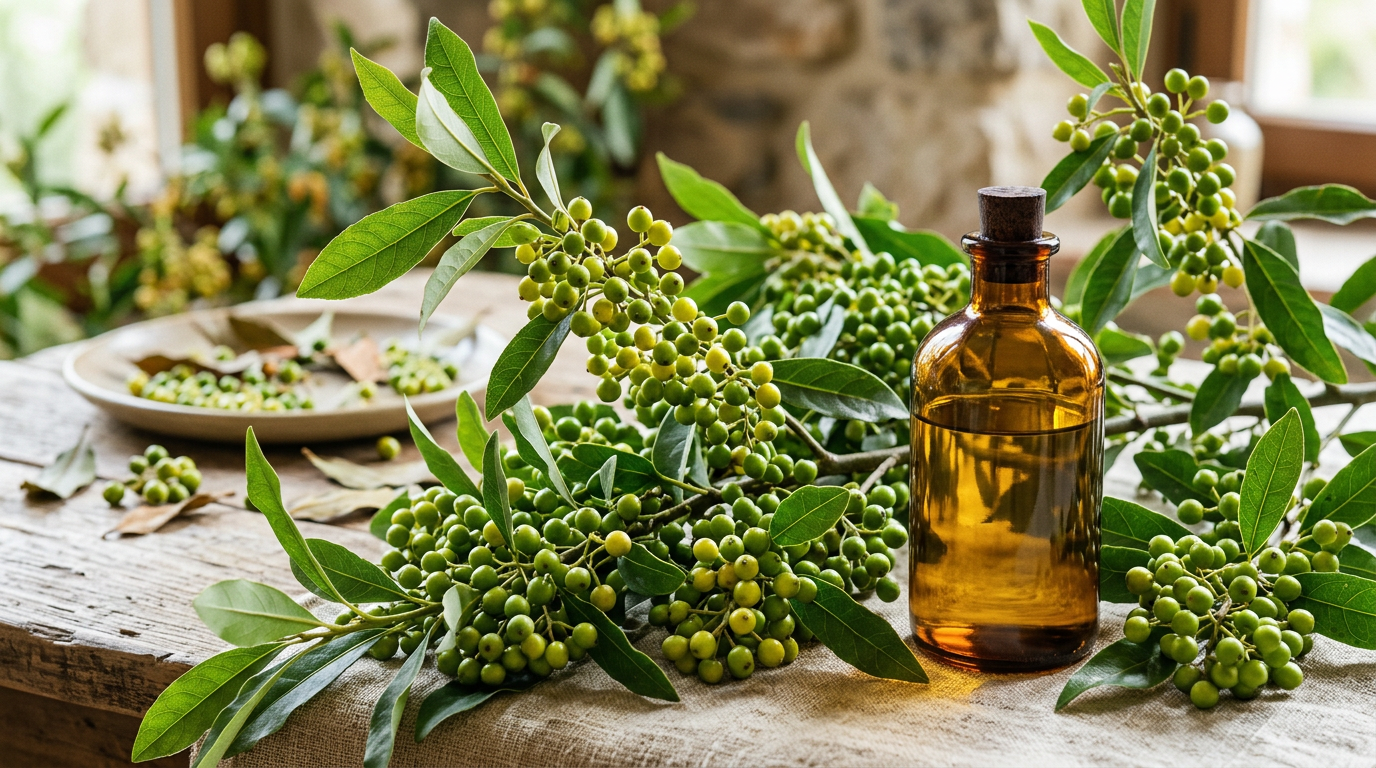
Litsea cubeba is a steam-distilled essential oil pressed from the small pepper-like fruit of the Litsea cubeba tree, native to parts of China and Southeast Asia. Formulators reach for it because it delivers a sharp, citrusy top note at a lower cost than lemon or lemongrass oil, and it holds up reasonably well once blended into wax or soap base. Its main component is citral, which is also what gives it that verbena-like brightness. Because citral is reactive, it shapes almost every other answer in this piece.
How is litsea cubeba different from lemongrass or lemon essential oil?
All three share high citral content, but the surrounding chemistry differs. Lemongrass tends to read grassier and sharper, lemon oil (cold-pressed, not distilled) carries more limonene and a thinner, zestier top note, and litsea cubeba sits somewhere in between with a slightly fruitier, almost verbena-like edge. In practice, many soapers substitute litsea cubeba for lemongrass at a similar rate, though the scent profile isn't identical. Cost and citral percentage on the batch-specific GC-MS report are usually the deciding factors.
What does litsea cubeba smell like on its own versus blended?
Neat, litsea cubeba reads as sharp, lemony, and slightly green, with a fruitiness that keeps it from smelling purely citrus. In a blend it softens quickly and works well as a top note that fades within the first ten to fifteen minutes, handing off to whatever base notes are underneath. On its own in a candle or soap, it can smell one-dimensional after the initial sniff, which is why most formulas pair it with something woody or floral to round it out.
Candle Making: Flash Point, Fragrance Load, and Throw
What is the litsea cubeba flash point, and why does it matter?
Litsea cubeba's flash point is commonly cited around 121°F (49°C) closed cup, though this varies by supplier, distillation lot, and how the SDS was tested, so treat any single number as a starting reference rather than a fixed constant. Flash point matters because it tells you the minimum temperature at which the oil's vapors can ignite near an open flame, which is relevant both during pouring and, indirectly, to how the scent behaves once the candle burns. Always pull the current SDS from your specific supplier rather than relying on a figure from an old batch.
Does the flash point change how I pour candles with litsea cubeba?
Yes. Most wax suppliers recommend adding fragrance and essential oils below 185°F (85°C) for soy and paraffin blends, which is already well above litsea cubeba's flash point, so the oil should be stirred in during the cooling phase, not at peak melt temperature. Adding it too hot risks flashing off the more volatile citral fraction before the wax sets, which quietly weakens your scent throw without any obvious warning sign. A thermometer and a consistent pour temperature matter more here than with heavier, less volatile oils.
What fragrance load works best for litsea cubeba in candles?
Most formulators start around 6 to 8 percent of total wax weight for soy and coconut wax blends, and slightly lower, closer to 5 percent, for paraffin, since paraffin tends to carry citrus notes more readily. Because litsea cubeba is a light, fast-evaporating top note, pushing the load higher doesn't always translate to a stronger hot throw. It's usually more effective to blend it with a fixative like patchouli, cedarwood, or a synthetic musk base to anchor the scent than to simply add more litsea cubeba.
Will litsea cubeba give a strong cold throw and hot throw?
Cold throw, the scent from an unlit candle, is usually one of litsea cubeba's strengths, since citral is volatile and fills a room easily at rest. Hot throw, the scent released while burning, tends to be weaker and shorter-lived because that same volatility means much of the top note has already dissipated before the wax pool fully forms. Blending it with heavier base notes and testing burn samples over several days is the only reliable way to confirm throw for your specific wax and wick combination.
Does litsea cubeba work in all candle wax types?
It performs reasonably well in soy, coconut-soy blends, and paraffin, though soy wax in particular can show a faint yellowing over several weeks of curing when citrus-forward oils are used at higher loads. Beeswax is a tougher pairing since its own natural scent competes with litsea cubeba's lighter top note. As with any new wax and fragrance combination, a small test batch cured for two to three weeks before committing to a full run will catch most compatibility problems.
Can litsea cubeba cause candle discoloration or clouding?
Some discoloration is possible, usually a light amber or straw tint rather than anything dramatic, and it tends to show up more in natural waxes than in paraffin. UV exposure accelerates this, so candles stored or displayed near direct sunlight will discolor faster regardless of wax type. If a consistent white or pastel finish matters for your product line, keeping candles out of direct light and using a titanium dioxide whitener in the wax can help offset the drift.
Soap Making: Usage Rates, Discoloration, and Saponification
What is the litsea cubeba max usage rate soap makers should follow?
Because of its citral content, most IFRA-informed usage charts place litsea cubeba's ceiling in rinse-off soap somewhere around 0.5 to 1 percent of total oil weight, though the exact figure depends on the citral percentage listed on your specific batch's GC-MS report. This is meaningfully lower than the usage rates typical for less reactive oils like lavender or patchouli. Rather than working from a single number pulled off a forum, check the current IFRA certificate for your supplier's lot and run the calculation for your own formula's total fragrance load.
Why does litsea cubeba soap discoloration happen, and can I prevent it?
Citral oxidizes over time, and that oxidation, combined with soap's high pH during and after saponification, commonly pushes citrus-heavy essential oils toward a tan or amber shift within the first few weeks of cure. This is the same litsea cubeba soap discoloration pattern seen with lemongrass and lemon oil, and it's largely cosmetic rather than a sign the soap has gone wrong. Keeping bars out of direct light, curing in a cool dark space, and using a touch of white kaolin clay or titanium dioxide in the base can slow the visible shift, though it rarely eliminates it entirely at higher usage rates.
Does litsea cubeba survive saponification, or does the scent fade?
Some fade is normal and expected. Cold process soap's alkaline environment and the heat of gel phase both accelerate the loss of lighter top notes, and litsea cubeba's citral fraction is among the more volatile components in most essential oil profiles. Formulators who want the scent to carry through cure often blend it with a fixative or add it at trace rather than at the start of mixing, which shortens its exposure to heat and high pH before the bars firm up.
Is litsea cubeba the same to use in melt and pour soap as in cold process?
The usage rate guidance is similar, but melt and pour skips the alkaline saponification stage entirely, so discoloration tends to be milder and the scent generally holds up better through the pour. The main risk with melt and pour is heat exposure during remelting, since litsea cubeba's volatile top notes can burn off if the base is overheated past what the manufacturer recommends. Adding the oil once the base has cooled slightly, just before pouring into molds, tends to preserve more of the scent.
Should I worry about skin sensitivity or sun exposure with litsea cubeba in soap?
Litsea cubeba is not considered phototoxic in the way that expressed bergamot or lime oil are, so it doesn't carry the same sun-exposure caution on most SDS documents. That said, citral is a recognized skin sensitizer for some individuals at higher concentrations, which is exactly why IFRA usage limits exist for rinse-off products. Staying within published usage rates and including a patch test recommendation on your product labeling is standard practice, and anyone with sensitive skin should check with a qualified healthcare provider before trying a new product regularly.
Blending and Scent Design
What blends well with litsea cubeba?
Woody and earthy notes tend to be the most reliable partners, cedarwood, patchouli, vetiver, and sandalwood all give the sharp citrus top note something to rest against. Florals like ylang ylang or geranium can round it into a softer, more complex profile, and a touch of ginger or black pepper picks up on litsea cubeba's naturally spicy undertone. Ratios in the range of two to three parts base note to one part litsea cubeba are a reasonable starting point for most blends.
How much litsea cubeba should I use in a blend before it overpowers everything?
Because it's such a loud top note, litsea cubeba can dominate a blend even at relatively low percentages, often somewhere around 15 to 20 percent of the total fragrance mix depending on what it's paired with. Testing in small batches and smelling the blend at multiple points, immediately after mixing, after 24 hours, and after a full cure, gives a much more accurate read than judging it fresh out of the bottle. What smells balanced on day one can shift noticeably as the more volatile citral fraction evaporates first.
Storage, Shelf Life, and Sourcing
How should I store litsea cubeba oil to protect scent quality?
Keep it in a dark glass bottle, tightly capped, away from heat and direct sunlight, ideally in a cool cupboard or a refrigerator dedicated to raw materials. Oxygen exposure is the main enemy here since citral oxidizes readily, so minimizing headspace in partially used bottles by decanting into smaller containers as the oil is used up will noticeably extend usable shelf life. A consistent, cool storage temperature matters more for litsea cubeba than for heavier, less volatile oils like patchouli or vetiver.
How long does litsea cubeba oil last before it goes off?
Most suppliers put shelf life at 12 to 24 months from distillation date when stored properly, shorter than many base-note oils and roughly in line with other citrus-family oils. Signs it's past usable life include a flat, less bright scent, a noticeably darker color, or a slightly sour or plasticky note creeping in alongside the citrus. Once an oil has drifted that far, it's not worth using in a product meant for sale, even if the discoloration or scent shift seems minor.
What should I look for on a GC-MS report or SDS for litsea cubeba?
Check the citral percentage first, since that single number drives your usage rate calculations for both candles and soap, and it can vary meaningfully between suppliers and harvest lots. The SDS should also list the flash point, any allergen declarations relevant to your labeling requirements, and country of origin, since distillation practices and fruit quality differ across growing regions. Keep a copy of both documents on file for every lot you use, not just at first purchase, since reputable suppliers reissue them each harvest.
Is litsea cubeba oil the same as "may chang" oil?
Yes, may chang (sometimes spelled mountain pepper or exotic verbena in older catalogs) is simply another common name for litsea cubeba oil, and the two terms are used interchangeably across suppliers. If you see a product labeled May Chang with no botanical name attached, the GC-MS report should still list Litsea cubeba as the species, since that confirms you're working with the same oil regardless of the marketing name on the bottle. Always verify the Latin binomial rather than relying on the common name alone when sourcing from a new supplier.