
Beyond Citral: The Minor Notes in Litsea Cubeba Oil
Ask anyone who works with litsea cubeba oil what defines it, and the answer comes fast: citral. It's the compound responsible for that bright, lemony top note that made this oil a staple in perfumery and skincare formulation long before "citrus beyond citrus" became a way to describe it. Citral typically accounts for the majority of the oil by volume, and it deserves the attention it gets. But a gas chromatography report on litsea cubeba oil rarely stops at one line item. Underneath the citral peak sits a longer list: limonene, citronellal, methylheptenone, linalool, geraniol, and a handful of trace compounds that shift in proportion depending on where the fruit was grown, when it was harvested, and how carefully it was distilled.
This piece is about those minor players. Understanding the full litsea cubeba chemical composition, not just the headline compound, helps explain why two bottles labeled "100% pure litsea cubeba oil" can smell noticeably different from each other, and why a GC-MS report is worth reading past the first row.
What's Actually in the Bottle
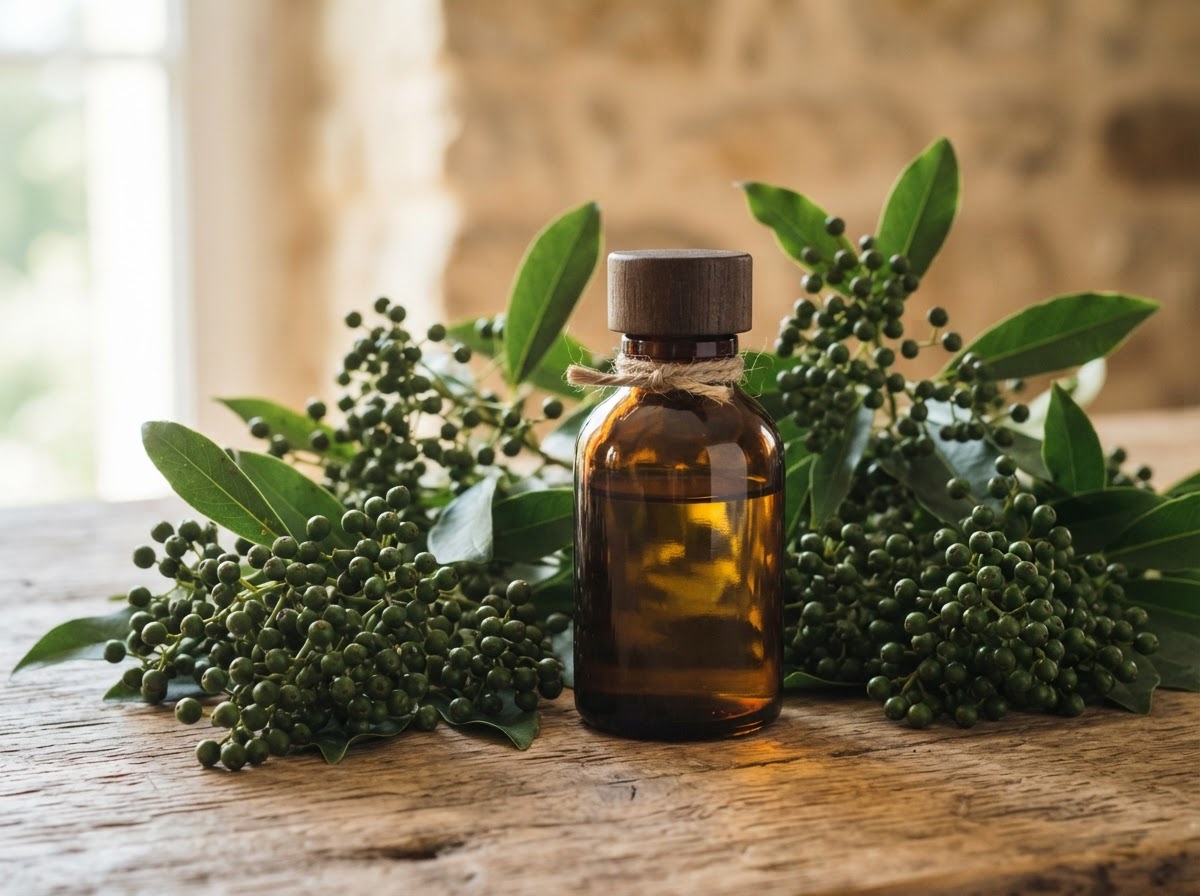
Litsea cubeba oil is steam-distilled from the small, pepper-sized fruits of the Litsea cubeba tree, a member of the Lauraceae family native to hillside regions of China and parts of Southeast Asia. The fruit is crushed and distilled while fresh, and the resulting oil is a pale yellow liquid with an intensely citrus, slightly green aroma. It's sometimes called "may chang" oil in older aromatherapy literature, and it's frequently compared to lemongrass because the two share their dominant compound.
A representative GC-MS profile of litsea cubeba oil, drawn from published analytical literature and typical batch reports, looks roughly like this:
| Compound | Typical Range | Aromatic Character |
|---|---|---|
| Citral (neral + geranial) | 70–85% | Sharp, lemony, verbena-like |
| Limonene | 2–10% | Sweet citrus, orange peel |
| Citronellal | 1–4% | Green, slightly rosy |
| 6-Methyl-5-hepten-2-one (methylheptenone) | 1–5% | Fruity, mildly musty-green |
| Linalool | trace–3% | Floral, faintly woody |
| Geraniol | trace–2% | Sweet, rose-like |
| Other trace compounds | remainder | Varies by origin and season |
These are ranges, not fixed numbers. A batch harvested during peak fruit ripeness and distilled promptly tends to sit at the higher end of the citral range. A batch from fruit picked slightly early, or distilled after a longer holding period, often shows more of the green, less refined notes and a lower citral percentage. This is exactly why a supplier's GC-MS documentation matters more than the label copy on the bottle.
Limonene in Litsea Cubeba Oil: The Citrus Backbone
Of the minor compounds, limonene is the one most people have actually heard of, because it shows up in nearly every citrus-derived essential oil on the market, from orange to bergamot to lemon. In litsea cubeba oil, limonene usually sits in the low single digits to around ten percent, well below citral, but it does real work in shaping the scent.
Where citral reads as sharp and almost tart, limonene rounds the profile out. It contributes the sweeter, peel-like facet that keeps litsea cubeba oil from smelling purely sour or medicinal. Perfumers and formulators who work with the oil often describe this interplay as the difference between a one-note lemon candy smell and something that reads as a fresh-cut citrus fruit, skin and all. Limonene is also one of the more volatile compounds in the blend, meaning it tends to be among the first notes to lift off the skin or out of a diffuser, giving litsea cubeba oil its quick, bright opening before the deeper citral notes settle in.
Limonene has been widely studied as a compound in its own right, separate from litsea cubeba oil specifically, largely because it's so common across the citrus family. Some of that broader research has looked at limonene's behavior in topical formulations and its stability under light and heat exposure. Applied to litsea cubeba oil, this research suggests that batches with a higher limonene fraction may be somewhat more prone to oxidation over time if stored carelessly, which is one more reason proper storage (dark glass, cool temperatures, minimal air exposure) matters for preserving the oil's original aromatic balance.
The Supporting Cast: Citronellal, Methylheptenone, Linalool, and Geraniol
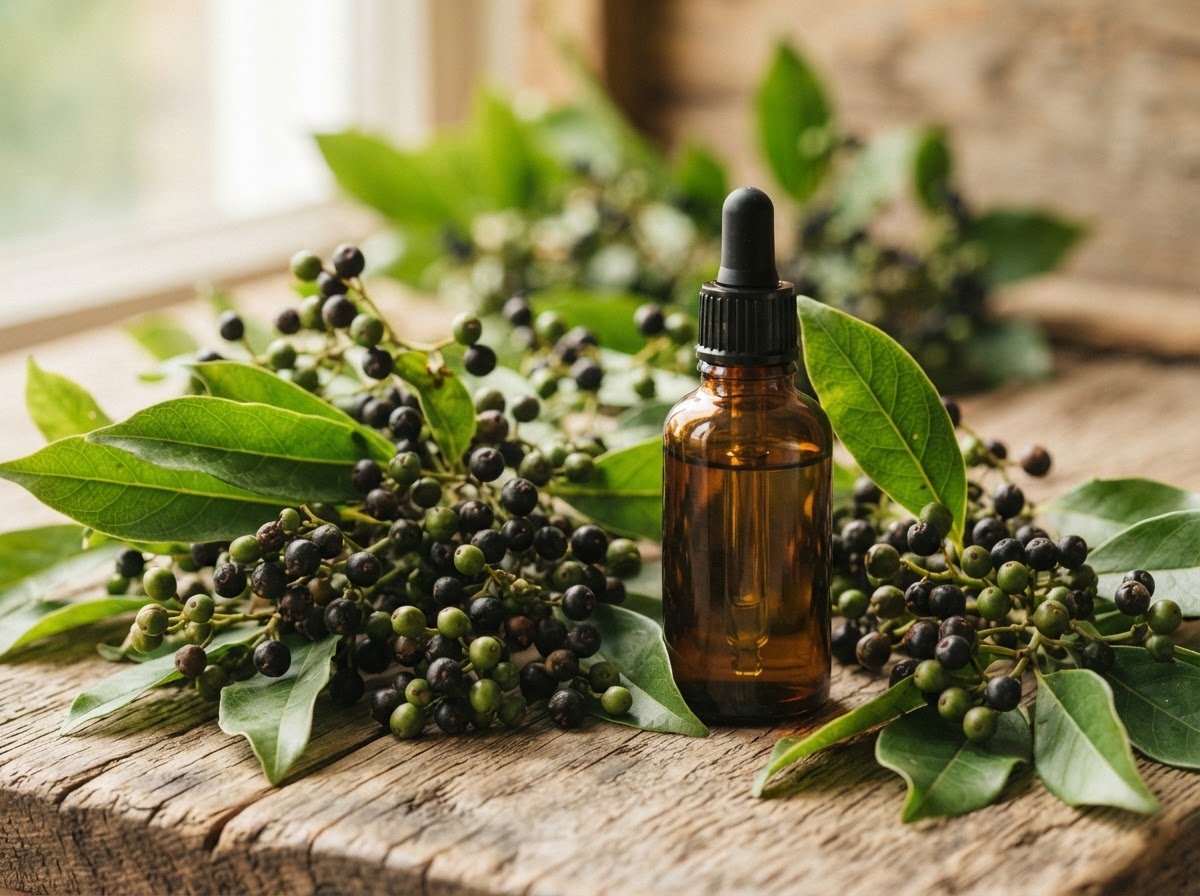
Beyond limonene, several smaller constituents round out the litsea cubeba minor constituents profile. None of them individually make up more than a few percent of the oil, but together they add texture that a citral-only synthetic blend can't replicate.
Citronellal
Citronellal contributes a green, slightly rosy note that softens citral's edge. It's the same compound found at much higher concentrations in citronella oil, and even a small amount in litsea cubeba oil adds a faint herbal depth underneath the citrus brightness.
Methylheptenone
This compound has a fruity, faintly green-musty character. It's one of the harder notes to isolate by nose alone, but formulators who work with the oil regularly say its absence or reduction is noticeable, the scent reads as flatter and more one-dimensional without it.
Linalool and Geraniol
Both are floral compounds common across many essential oils, from lavender to rose geranium. In litsea cubeba oil they appear only in trace to low single-digit amounts, but they add a soft, sweet undertone that keeps the overall profile from leaning too sharply into pure lemon territory. Geraniol in particular is one of the compounds regulated under IFRA (International Fragrance Association) guidelines as a recognized fragrance allergen, which is worth knowing if you're formulating products for sale rather than personal use.
The relative proportions of these minor compounds are what give different suppliers' litsea cubeba oil its individual character. Two oils with nearly identical citral percentages can smell distinctly different depending on how much citronellal, methylheptenone, linalool, and geraniol round out the remainder.
What Research Has Actually Looked At
It's worth being precise about what "research" means in the context of an essential oil like this one. Most published studies on litsea cubeba oil and its individual compounds are laboratory-based: gas chromatography analyses documenting composition, in vitro work looking at how isolated compounds behave in controlled settings, or small-scale studies on scent perception and mood association. These are legitimate scientific observations, but they are not the same as clinical evidence about what the oil does for a person using it at home, and they shouldn't be read that way.
Some research has examined citral's chemical stability and how it degrades under UV exposure and heat, which is part of why litsea cubeba oil is generally recommended for storage away from sunlight. Other laboratory work has profiled how citral, limonene, and citronellal interact when combined, looking at whether the blend behaves differently than any single compound in isolation. Findings in this area are still developing, and researchers are generally cautious about extrapolating lab results to real-world use.
Analytical chemists who study essential oils tend to emphasize the same point: a GC-MS chromatogram tells you what's in the bottle, not what the oil will do once it leaves the lab. That gap between composition data and lived experience is exactly where a lot of marketing overreach creeps into the essential oil space.
On the aromatic and sensory side, some small studies have explored how citrus-forward scent profiles, litsea cubeba oil included, are perceived in diffuser settings, looking at self-reported mood and alertness in controlled environments. These are interesting observations about scent psychology, but they're anecdotal evidence at best when it comes to any individual's experience, and they don't amount to proof of an outcome. People report enjoying the scent in a morning diffuser blend or a workspace routine, and that subjective experience is worth taking seriously on its own terms, without needing to dress it up as anything more.
Safety Profile and Considerations
Citral, the dominant compound in litsea cubeba oil, is recognized by IFRA and other fragrance safety bodies as a compound that can cause skin reactivity in some individuals when used undiluted or in high concentrations. This isn't unique to litsea cubeba oil; it applies to any citral-rich oil, including lemongrass and melissa. In practical terms, this means a few things for anyone using the oil topically:
- Always dilute before skin contact. A common starting point for body-safe topical use is a 1 to 2 percent dilution in a carrier oil (roughly 6 to 12 drops of essential oil per ounce of carrier), though formulators working on leave-on products often stay even lower given citral's sensitization profile.
- Patch test first. Apply a small diluted amount to an inconspicuous area of skin, such as the inner forearm, and wait 24 to 48 hours before broader use.
- Avoid undiluted application. Applying the neat oil directly to skin increases the likelihood of a reaction and isn't necessary for enjoying its aromatic qualities.
- Store away from light and heat. Citral and limonene both degrade with UV and heat exposure, and degraded citral has been associated with higher rates of skin reactivity in some fragrance industry testing.
- Keep away from eyes and mucous membranes. As with any concentrated essential oil, contact with sensitive areas should be avoided.
- Consult a qualified healthcare provider before using any essential oil if you are pregnant, nursing, or have generally sensitive skin, and always keep essential oils out of reach of children and pets.
If you're formulating products for sale rather than personal use, note that geraniol and citral both appear on fragrance allergen labeling lists in several regulatory frameworks, so ingredient disclosure requirements may apply depending on your market.
Sourcing and Quality Indicators
Because the minor constituents shift so much based on growing conditions and distillation practices, sourcing is where quality really gets decided, long before a bottle reaches a shelf. A few things worth checking when evaluating a litsea cubeba oil supplier:
GC-MS Documentation
A reputable supplier should be able to provide a current batch-specific GC-MS report, not a generic composition chart pulled from a reference book. Look for citral in the 70 to 85 percent range as a general benchmark, with the minor compounds (limonene, citronellal, methylheptenone, linalool, geraniol) present in proportions roughly consistent with the ranges above. A report showing citral far outside that range, either unusually low or suspiciously close to 100 percent, is worth asking questions about. Naturally derived citral rarely appears in isolation; a profile that looks too clean can be a sign of adulteration with synthetic citral or dilution with a cheaper citrus oil.
Origin and Harvest Timing
Litsea cubeba fruit is typically harvested in a narrow window when the fruit reaches peak ripeness. Fruit picked too early tends to yield oil with a greener, less rounded profile and a lower citral content. Suppliers who can speak specifically to harvest timing and distillation turnaround (ideally distilled within a day or two of picking) generally produce more consistent oil batch to batch.
Distillation Method
Steam distillation is the standard method for litsea cubeba oil, and it should be the only method used. Solvent extraction methods can pull additional compounds into the final product that don't belong in a therapeutic-grade fragrance or cosmetic oil, and they change the compound ratios in ways that aren't always disclosed.
Color and Clarity
Fresh litsea cubeba oil is typically a pale yellow to light straw color. An oil that appears notably darker or has an off, slightly rancid edge to the scent may be oxidized, either from age or poor storage conditions before it reached the bottle.
Packaging
Given how sensitive citral and limonene are to light and oxygen, quality oil should always ship and store in dark amber or cobalt glass, never clear glass or plastic. This is a small detail, but it's one of the easiest ways to judge whether a supplier understands the chemistry of what they're selling.
Reading the Whole Profile
Citral will always be the headline of any conversation about litsea cubeba oil, and it earns that spot honestly. But a chromatogram is a story with more than one character. Limonene shapes the opening. Citronellal and methylheptenone add depth in the middle. Linalool and geraniol round out the edges. Together, these litsea cubeba minor constituents are why one supplier's oil can smell rounder and fuller than another's, even when the citral percentage on paper looks nearly identical.
For anyone buying or formulating with this oil, the practical takeaway is simple: ask for the GC-MS report, understand what a healthy compound range looks like, and pay attention to how the oil is stored and shipped. The essential oil minor compounds don't get the marketing spotlight, but they're a meaningful part of what separates a well-sourced batch from a mediocre one.